
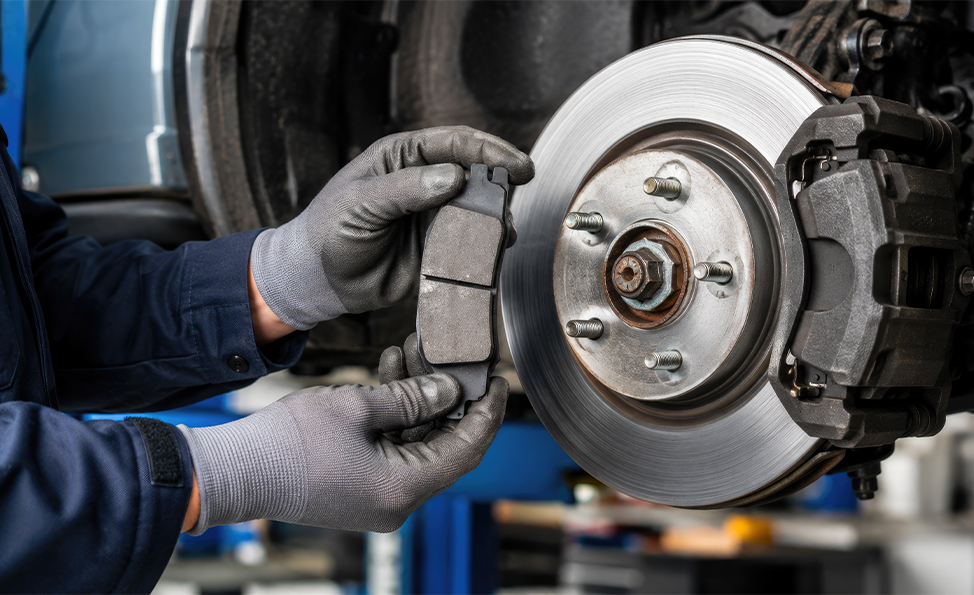
Your brakes are one of the most important safety systems on your vehicle. When they’re working right, you don’t think about them much. But when something is off, your car usually lets you know. The problem is, a lot of drivers either don’t recognize the signs or push them off until the situation gets more serious.
If you’re driving in Warner Robins or anywhere in Middle Georgia, here’s what to watch for — and why catching brake problems early can save you money and keep you safer on the road.
Why Healthy Brakes Are Essential for Safe Driving
Brakes do one thing, and they need to do it well: stop your vehicle when you ask it to. A fully functioning brake system gives you control in emergencies, helps you manage speed in traffic, and protects everyone in the car.
The system has multiple components — brake pads, rotors, calipers, brake fluid, and brake lines — and any one of them can develop problems over time. Most wear happens gradually, which is why the warning signs of vehicle problems are easy to overlook until they become impossible to ignore.
Brakes don’t fail all at once in most cases. They give you signals first. Knowing what those signals sound, feel, and look like is the first step to staying ahead of a real problem.
Common Warning Signs That You Need Brake Repair
These are the symptoms we see most often at Kersey Transmission & Exhaust. If any of these sound familiar, it’s worth scheduling an inspection.
Squealing or Squeaking When You Brake
A high-pitched squeal when you apply the brakes is usually one of the first signs that your brake pads are getting low. Most pads have a small metal wear indicator built in — when the pad wears down to a certain point, that indicator makes contact with the rotor and creates that sound.
Some squealing can happen if the vehicle has been sitting for a while or after driving in wet conditions. If it clears up on its own, it may not be a concern. If it keeps happening every time you brake, have it checked.
Grinding Noise When You Stop
Grinding is a step beyond squealing, and it’s a more urgent sign. When you hear metal-on-metal grinding during braking, it often means the brake pads are worn through entirely. Now the metal backing plate is making direct contact with the rotor.
At that point, you’re not just looking at a pad replacement. The rotor may also be damaged, which raises the cost of repair. Acting at the squeal stage is almost always cheaper than waiting for the grind.
Vibration or Pulsating When Braking
If your brake pedal pulses up and down, or if the steering wheel shakes when you slow down, that typically indicates warped brake rotors. Rotors can warp from heat cycles, hard braking, or just wear over time.
A pulsating pedal can also be a sign of uneven pad deposits on the rotor surface. Either way, the issue affects how evenly your vehicle slows down, which is a problem you want sorted before it gets worse.
Soft or Spongy Brake Pedal
A brake pedal that goes further toward the floor than it used to, or one that feels soft or spongy under your foot, needs attention. This often points to:
- Low or contaminated brake fluid
- Air in the brake lines
- A problem with the master cylinder
- A brake fluid leak
Any of these can reduce braking power. A soft pedal is not something to drive on long-term. Get it inspected as soon as you can.
Vehicle Pulling to One Side
If your car pulls left or right when you apply the brakes, that usually means one side is doing more work than the other. A stuck caliper, uneven pad wear, or a fluid issue can all cause this kind of imbalance. Pulling during braking can affect your ability to stay in your lane, especially in emergency stops.
Longer Stopping Distances
This one is harder to notice gradually, but if your vehicle takes longer to stop than it used to, your braking system isn’t performing the way it should. Worn pads, low brake fluid, or rotor damage can all reduce stopping efficiency. You may not notice the change day to day, but it adds up — and in a sudden stop situation, every foot matters.
What Causes Brake Problems?
Most brake wear is just the result of normal use. Pads and rotors are designed to wear down over time. But a few factors speed up that wear:
- Driving style: Hard, frequent braking puts more heat and stress on components. Highway driving with gradual slowing tends to be easier on brakes than stop-and-go city traffic.
- Vehicle weight: Heavier vehicles — trucks, SUVs, and vans — put more demand on the brake system than lighter cars.
- Low-quality parts: Not all brake pads and rotors are equal. Cheap components can wear faster and may not stop as effectively.
- Neglected fluid: Brake fluid absorbs moisture over time. Old, contaminated fluid can reduce braking performance and cause internal corrosion.
- Skipping inspections: Regular brake checks allow technicians to catch wear before it reaches a critical point.
Why Ignoring Brake Issues Can Be Dangerous
Brake problems don’t fix themselves. What starts as worn pads eventually turns into damaged rotors. Soft pedal issues can progress to reduced braking ability or pedal failure. A stuck caliper can cause uneven wear, pulling, and overheating.
Beyond the repair cost, there’s the safety factor. Your ability to stop your vehicle in an emergency depends entirely on your brake system being in working order. A vehicle that takes 10 or 15 extra feet to stop can be the difference between a close call and a collision.
Brake problems also tend to get more expensive the longer they go unaddressed. A pad replacement is a straightforward repair. A pad-and-rotor job costs more. If calipers or brake lines get involved, the cost goes up again. Early diagnosis almost always saves money in the long run.
When Should You Schedule a Brake Inspection?
There’s no single mileage milestone that applies to every vehicle. Brake wear depends on how the vehicle is driven, what it’s used for, and how it’s maintained. That said, here are some general guidelines:
- Have your brakes visually inspected during every tire rotation or oil change
- Schedule a dedicated brake inspection if you notice any of the warning signs above
- Check brake fluid condition at least once a year — or during any major service visit
- Don’t wait for an annual service if something feels or sounds off — get it looked at sooner
If you haven’t had your brakes looked at in a while, or if something about your braking doesn’t feel right, don’t guess. Have an experienced auto repair technician take a look at it.
Get Professional Brake Repair in Warner Robins, GA
At Kersey Transmission & Exhaust, we work on brakes the same way we approach every repair — we tell you what we find, explain what it means, and let you make the call.
If you’re searching for brake repair in Warner Robins, GA, we’re here to help. Our team inspects the full system, including pads, rotors, calipers, fluid, and brake lines, so nothing gets missed.
We work on all makes and models, and we make it easy to get scheduled. Request an appointment, and we’ll get your vehicle in and take a look.
Frequently Asked Questions
Unusual noises, vibrations when braking, a soft brake pedal, or longer stopping distances can all indicate brake problems. Having your brakes inspected early can help prevent more extensive repairs and improve vehicle safety.
Brake squealing often occurs when brake pads begin to wear down. While some noise may be normal, persistent squealing should be inspected to determine whether brake service is needed.
Grinding noises can indicate severely worn brake pads or damage to other brake components. Addressing the issue promptly can help prevent additional wear and more costly repairs.
Brake inspections are typically recommended during routine vehicle maintenance. Regular inspections can help identify wear before it affects braking performance and safety.
Worn brake components can reduce braking efficiency and increase stopping distances, making it more difficult to react to sudden traffic conditions.
Brake issues can worsen over time and may affect your ability to stop safely. Early diagnosis and repair can help protect your vehicle, passengers, and other drivers on the road.


