
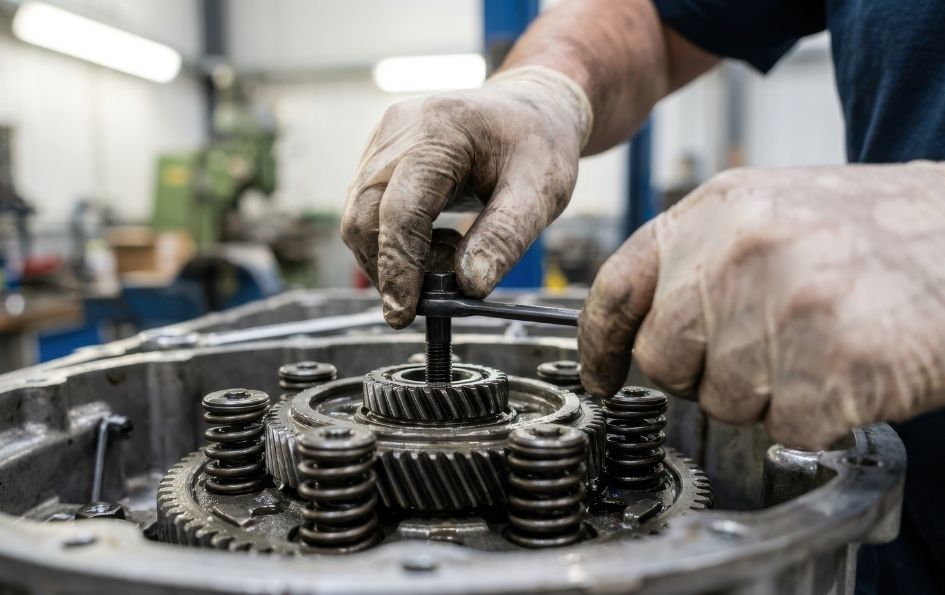
Step One: Diagnosis Usually Takes a Few Hours
No honest timeline exists before diagnosis. A proper transmission diagnosis includes scanning for stored codes, checking fluid level, color, and smell, verifying line pressure, and driving the vehicle to reproduce the complaint under load. That last part matters. Plenty of transmission problems only appear at a specific speed, temperature, or gear change, so a test drive around the block won’t find them. Expect a few hours, and expect the shop to keep the vehicle if the fault only shows up when the unit is fully warm.Why the diagnosis changes the timeline so much
- Electrical or sensor fault: Often same-day or next-day.
- Fluid contamination only: A service and a recheck.
- Internal mechanical damage: The unit comes out, and the clock resets around teardown.
Typical Timelines by Type of Repair
Fluid and filter service: 1 to 3 hours
If the fluid is burnt but the unit still shifts through all gears, a drain, filter, and refill with the correct specification fluid may be all that’s needed. Most vehicles are in and out the same day. This is maintenance, not a rescue — it works best before symptoms get bad.Solenoid, sensor, or wiring repair: Half a day to 2 days
Shift solenoids, speed sensors, and connectors cause harsh shifts, delayed engagement, and limp mode. Some are accessible from outside the case; others require dropping the pan or partially removing the unit. Parts availability drives the difference.Valve body work: 1 to 3 days
The valve body directs fluid pressure to the right clutch packs. When passages wear, or a solenoid pack fails inside it, the unit shifts erratically even though the clutches are fine. Replacing or reconditioning one is a day of labor plus time for the correct part to arrive and for post-repair adaptive relearning.Full rebuild: 3 to 7 business days
A rebuild means removing the transmission, disassembling it completely, inspecting every clutch, drum, bearing, and hard part, replacing what’s worn, and reassembling to spec. Add torque converter service, a fluid flush of the cooler lines, and road testing afterward. Teardown often reveals damage that wasn’t visible from outside, which is exactly why a firm date before teardown is a guess.Replacement with a remanufactured or new unit: 2 to 6 business days
Sometimes replacing the transmission is faster and smarter than rebuilding it, especially on high-mileage vehicles or units with a cracked case. Here, the timeline is mostly shipping.What Actually Adds Days to the Job
Vehicle owners are often surprised that the delay isn’t wrench time. It’s usually one of these:- Parts sourcing. Uncommon or older vehicles can wait on a hard part or a specific clutch kit.
- Teardown surprises. A burnt clutch pack often means metal in the cooler lines and converter, which have to be cleaned or replaced.
- Related failures. Cracked mounts, leaking axle seals, a failing flexplate, or restricted exhaust that made the unit hunt for gears all need addressing while the vehicle is apart.
- Adaptive relearn and road testing. Many modern transmissions learn shift behavior over a set number of miles. Skipping that testing means handing back a vehicle nobody verified.
- Approval time. If teardown findings change the estimate, the clock pauses until you approve the revised plan.
How to Keep the Repair as Short as Possible
Bring the vehicle in early. The single biggest driver of long, expensive transmission jobs is driving on a slipping unit until debris circulates through the whole system, contaminating the converter and cooler. Be specific about symptoms. When it happens cold or hot, at what speed, in which gear, with or without a load — that detail can cut diagnostic time significantly. Say yes to the test drive. A shop that road tests before returning the vehicle is protecting you from a second round of downtime. And keep up with fluid service. Clean fluid at the right interval prevents most of the failures that turn into week-long rebuilds.Frequently Asked Questions
Sometimes. Fluid services, some sensor and solenoid repairs, and external leak fixes are often same-day. Anything requiring the unit to come out of the vehicle realistically needs multiple days.
Replacement can be faster when a good remanufactured unit is available and ships quickly. A rebuild takes longer but keeps your original unit and lets the shop address exactly what failed. The right choice depends on the vehicle’s mileage and condition.
Because the same symptom can come from a $150 sensor or a worn clutch pack. A real diagnosis, and sometimes a teardown, is the only way to quote the job accurately instead of quoting high to cover unknowns.
If the vehicle is slipping, overheating, or losing gears, driving it makes the repair bigger and longer. Short, low-speed trips are lower risk than highway driving, but the safest answer is to limit use until it’s inspected.
A slightly different shift feel for the first several dozen miles is normal while the computer relearns. Any slipping, flashing warning lights, or new leaks should be reported immediately so they can be corrected under the repair.
Get a Straight Timeline Before You Commit
If your vehicle is slipping, shifting hard, or throwing a transmission warning, bring it in for a diagnosis. We’ll test it under load, tell you exactly what failed, and give you a realistic repair window and cost before any work starts — whether that’s a fluid service, a valve body, or a full rebuild.
Contact Kersey Transmission & Exhaust to schedule a transmission diagnosis.


